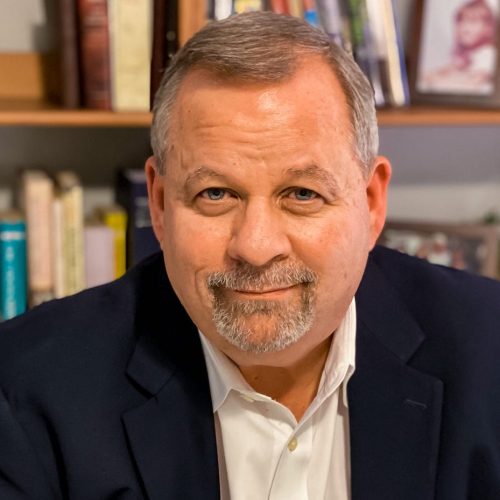
INDIANAPOLIS — I’ll admit it. A year and a half ago, I thought iRacing was just a game.
An Xbox. A controller. Someone sitting in front of a television pretending to be a race car driver.
I could not have been more wrong.
Over the past 18 months, I have learned how seriously many professional drivers take simulator training. They spend substantial time learning circuits, refining technique, and preparing for race weekends. Professional teams use sophisticated simulators to evaluate car behavior and setup changes before arriving at the track.
That requires preparation, concentration, and discipline. It also forced me to reconsider something I had dismissed without really understanding it.
Then I began to appreciate the size of the community.
iRacing alone reports more than 350,000 racers worldwide. Its platform supports thousands of active private leagues alongside its official racing series. That represents a substantial community of people choosing to spend their time practicing, competing, and getting better.
But the moment that truly opened my eyes came when we began building the American Formula Sim Series.
We had a straightforward concern: Where would we find our drivers?
We believed in the concept. We wanted to build a competitive open-wheel series and give its drivers meaningful exposure to sim to real racing. But believing in an opportunity and finding people willing to participate are two different things.
Fortunately, we had Brian McRae, our series director (and an Advisory Board Member for Speedway Venture Studio) helping guide the effort.
Brian brings more than a decade of sim racing experience as a team owner, series promoter, and competitor. He understands this community because he has spent years participating in it, organizing competition, and learning what matters to drivers.
He has been the guiding force behind the American Formula Sim Series. His experience has helped turn our enthusiasm into a practical plan, and his perspective has been invaluable as I have learned just how much I did not know.
I have tremendous appreciation and admiration for Brian’s knowledge, judgment, and commitment. A founder can bring a vision, but experienced people are essential to making that vision work. Brian has been that person for us.
We were also incredibly fortunate that iRacing introduced us to its Time Attack format.
Think of it as something like an NFL Combine for our driver search. Drivers could demonstrate their pace on the same circuit, in the same type of car, and put a measurable performance on the board.
That gave us a starting point for identifying talent and inviting drivers into the next stage of selection. Speed would open the door. Race craft, consistency and judgment would also matter as we narrowed the field.
The response?
More than 200 drivers from 13 countries tried to qualify for our new series.
Mind-blowing.
We had been wondering where we would find drivers. Suddenly, drivers from around the world were showing us how much interest already existed.
That experience changed my perspective more than any presentation or market report could have.
Behind those lap times are people. People who practice after work. People who study their mistakes. People who care deeply about racing and want a chance to compete, improve and be recognized.
Brian understood that community long before I did. Seeing the response to our Time Attack helped me appreciate both the opportunity in front of us and the importance of having someone with his experience leading the series.
I suspect plenty of people still see sim racing the way I once did. They hear the term and picture a casual console game or someone racing at a desk.
I understand that reaction. It was mine.
But I have learned that the equipment alone does not tell you how serious the person using it might be.
For some, sim racing is recreation. For others, it is serious competition. For professional drivers, simulation can be an important part of preparation. Those purposes all have a place within this community.
For us at Speedway Venture Studio, that creates an exciting responsibility. Through the American Formula Sim Series and SVS Insiders, we want to give talented drivers a platform where their performance matters and fans have a reason to follow their stories. To enhance that effort, American Formula Sim Series races will be broadcast on SPEED SPORT 1 making it the only sim series on a network channel.
We still have to earn their trust. A strong qualifying response is an encouraging beginning. Building a series worthy of their commitment is the work ahead.
With Brian’s leadership, iRacing’s support, SPEED SPORT 1’s media exposure and the drivers stepping forward to compete, I am more excited about that work than ever!
I used to think iRacing was just a game.
Now I’m helping build a series for the people who showed me how much I had overlooked.
Will Marotti is the founder of Speedway Venture Studio, a venture studio platform built for the motorsports industry. SVS helps racing teams and drivers build durable revenue models beyond traditional sponsorship. Follow for more on the business of motorsports. Contact will@SVSInsiders.com