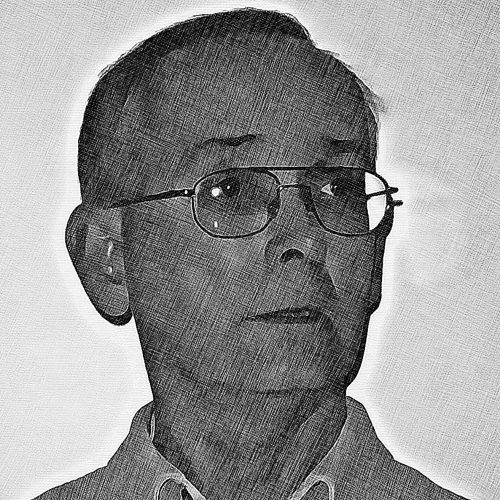
BALLSTON SPA, N.Y. — As our look back at the top drivers we’ve seen perform over the years continues, we’ll lead off with another asphalt giant, Jerry Cook.
Also a solid winner on the Fonda Speedway dirt, Cook was a master at garnering points in the pre-Tour days. Back then, every race counted toward the NASCAR National Modified Championship and he and Richie Evans trucked up and down the East Coast chasing every possible opportunity to outscore the other.
But famed car owner Ed Cloce, who had many stars of the day in his No. 69, always said that when Cook gave up chasing points in his own car and drove for him, he was the best at charging from high handicap starts to the front that he ever hired.
Cook’s 300-plus wins and six national titles earned him a spot in the NASCAR Hall of Fame alongside Rome, N.Y., neighbor Evans, with whom he battled night after night over many seasons. Cook might have been a little less daring than Evans, sometimes willing to settle for second or third, get the points and move on.
But he was a master at scheduling and logistics and as competitive as anyone over the years in cars he built himself.
Another asphalt master who recently joined Cook and Evans in the NASCAR Hall of Fame was Virginian Ray Hendrick, who repeatedly devoured the Yankees on his many trips north. His Tant/Mitchell “Flyin’ 11” was generally ahead of the competition design-wise and Tant’s engines were world class, but it was Hendrick’s steady hand and skill in traffic that got them to victory lane.
Hendrick was equally successful in the full-bodied Late Model Sportsman cars and was always a force to be reckoned with in both halves of Martinsville’s famed double headers.
Another great talent among the asphalt modified superstars was George Kent, a driver held in such high regard by Evans that before his untimely death at Martinsville, Richie had told us that when he retired, he’d field cars for Kent.
Kent won everywhere from the bullrings to Pocono but the modified special events at Oswego were where he really shined, winning the annual 200 multiple times with the same strategy: pitting early, getting the lead when others pitted and, as one of the fastest cars in the field, holding off all challengers to the end. The best in the business knew what he would do but could not top it.
Among the most talented we knew over the years was a New York transplant from New England who perished before reaching his full potential.
Don MacTavish snared the NASCAR National Sportsman title in 1966, then won modified races by the handful before losing his life in a horrific crash in the Permatex 300 at Daytona in 1969.
There’s an old saying that you can teach a young racer strategy but you can’t teach them to be fast. They either are or they’re not and MacTavish was fast with a capital “F” in anything he sat in. He was headed for the big time and would have equaled and likely surpassed fellow New Englander Pete Hamilton’s rapid success in NASCAR’s upper series had he lived.
We enjoyed watching some other great talents from New England over the years as well. Four of them, Bugsy Stevens, Freddy DeSarro, Ted Christopher and Mike Stefanik, were NASCAR National modified champions.
Stevens claimed three titles in a row beginning in 1967 while DeSarro was the 1970 champion. Christopher, who took the title in 2008, was equally competitive in Busch North cars, supermodifieds, midgets or whatever else he was recruited to wheel and fans either loved him or hated him for his aggressive style.
One of the best races we saw Christopher run was in Clyde Booth’s super at Plattsburgh’s Airborne Park. After a horrible run in the Oswego ISMA show, Booth tweaked his unusual creation substantially and Christopher charged from the last row to win going away, never rubbing a competitor on the way.
In victory lane, he was so winded that he had this writer answering questions from a local newspaper reporter.
Stefanik matched his mentor, Richie Evans, with seven modified titles between 1989 and 2006 and a pair of Busch North championships to equal the “Rapid Roman’s” nine NASCAR championships. And in ’97 and ’98, he won both the modified and Busch North championships, an unheard of feat. Considering that he took a few seasons off from the Northeastern wars to run in the Craftsman Truck and what is now the O’Reilly series, Stefanik had a truly amazing career.
Ironically, both Christopher and Stefanik would perish well before their time in small plane crashes.
The list of outstanding asphalt racers could go on and on and would include such notables as Maynard Troyer, Brian Ross, Leo Cleary, Roger and Merv Treichler and the father and son duo of Tony and Matt Hirschman, the latter of whom is considered to be the modern version of Richie Evans by many observers. But we’ll cut it off here and get ready to look at some great dirt talents in the near future.